The ability of steel and aluminum to withstand deeper draws in sheet metal stamping depends on the material’s physical properties:
Differences in Material Mechanical Properties
Steel is harder (for example, mild steel has a tensile strength of 300-500 MPa), while aluminum is more elastic (for example, the elastic modulus of aluminum alloy is approximately 70 GPa). Therefore, aluminum is more susceptible to plastic deformation during the drawing process. This means aluminum is more suitable for deeper draws because it can absorb more energy through elastic deformation, reducing the risk of fracture.
The Impact of Process Parameters on Materials
Steel: Due to its high hardness, it is prone to cracking or fracture during drawing. Parameters such as clamping force and drawing speed must be strictly controlled, and the mold must be stronger.
Aluminum: Its greater elastic deformation capacity allows it to withstand deeper draws, but care must be taken to avoid excessive deformation that could lead to material failure.
Application Recommendations
If deep drawing is required, aluminum is preferred. If steel must be used, optimize the mold design (for example, by adding tempering treatment or adjusting the lubrication system) and strictly control process parameters (for example, by reducing the drawing speed and increasing the clamping force). Of course, if you need large-scale sheet metal manufacturing and processing, you can choose to cooperate with Mulan Group. Mulan Group has 12 years of experience in sheet metal manufacturing and processing. It has helped customers in more than 30 countries complete sheet metal processing tasks, such as sheet metal cabinets, sheet metal housings, process chassis, metal brackets and more, various sheet metal components, and has received unanimous recognition. We look forward to your cooperation consultation.
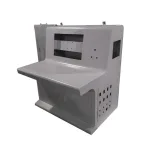
Here is our Custom sheet metal fabrication Display: