First, neither metal is rust-resistant without any anti-rust treatment; the material itself is inherently rust-resistant.
However, through a combination of anti-rust treatments and the material’s inherent properties, cold-rolled steel outperforms hot-rolled steel. Details are as follows:
Surface Quality Differences
Cold-rolled steel undergoes multiple treatments, including pickling and annealing, resulting in a smoother and flatter surface, which facilitates the adhesion of anti-corrosion coatings. Hot-rolled steel, on the other hand, has scale on its surface, requiring additional treatment to achieve the same rust-proofing effect.
Microstructural Influences
Cold-rolled steel has finer grains and a denser structure, resulting in greater corrosion resistance. Hot-rolled steel has coarser grains and more surface defects, making it susceptible to oxidation over time.
Of course, rust-proofing performance depends on the material and environment, not simply the rolling process. As mentioned above, anti-rust treatment is necessary to achieve rust-proofing performance:
1. Material Composition:
Ordinary hot-rolled and cold-rolled steel (such as Q235) does not contain anti-rust elements and is susceptible to rust.
Adding chromium or nickel (as in stainless steel) significantly improves rust resistance, but at a higher cost.
2. Operating Environment:
Coastal environments with high salinity: Both require protective coatings, but cold-rolled steel is more suitable for electroplating due to its smooth surface.
Dry indoor environments: The oxide scale on hot-rolled steel provides short-term protection.
If ordinary steel must be used, post-treatment can enhance rust resistance:
1. Hot-rolled Steel:
Sandblasting to remove oxide scale followed by application of epoxy primer offers a rust protection lifespan of approximately 3-5 years (ISO 12944 standard).
Hot-dip galvanizing (zinc layer thickness ≥ 85μm) offers a lifespan of over 15 years.
2. Cold-rolled Steel:
Electrogalvanizing (zinc layer 20-30μm) offers low cost and uniformity, making it suitable for precision parts.
Spraying with anti-rust oil prevents rust during short-term storage (6-12 months).
Note: Cold-rolled steel is commonly used in applications requiring precise rust prevention, such as automobiles and home appliances, due to its high dimensional accuracy (tolerance ±0.1mm) and smooth surface. Hot-rolled steel is primarily used in heavy industrial applications, such as construction and bridges, and requires regular maintenance.
In summary, rust resistance isn’t determined solely by the rolling process; it’s a comprehensive consideration of the material, treatment, and intended use. For budget-constrained individuals seeking short-term rust prevention, hot-rolled steel is more economical. For those seeking long-term corrosion resistance, cold-rolled steel with a coating is the optimal solution.
Finally, cold-rolled steel is often used in precision components (such as box-type transformer housings), and its rust resistance meets the requirements of outdoor or humid environments. Hot-rolled steel, due to its rough surface and low work-hardening, requires additional corrosion protection (such as galvanizing) to meet rust prevention requirements.
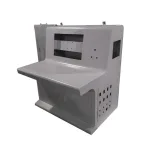
Here is our Custom sheet metal fabrication Display: