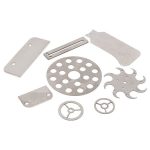
During laser cutting, stainless steel can experience localized hardening due to the high temperature. However,
the specific impact requires analysis based on process parameters and material properties.
Hardening Mechanism
During laser cutting, the high-temperature laser beam melts the stainless steel surface, rapidly cooling it to form martensite, resulting in a localized increase in workpiece hardness. This heat treatment effect is particularly pronounced at the cut edge and may alter the material’s original mechanical properties.
Influencing Factors
Cutting Parameters: Excessively high power or slow speeds increase heat accumulation and exacerbate hardening; appropriately reducing power and increasing speed can reduce the extent of hardening.
Material Properties: Stainless steel has good thermal conductivity and readily forms austenite at high temperatures, which transforms to hard martensite after rapid cooling.
Process Protection: Using nitrogen-assisted cutting or optimizing nozzle design can reduce heat conduction and alleviate hardening issues.
Potential Issues
Hardening may increase workpiece edge brittleness and reduce tensile strength. Adjusting cutting parameters (such as power, speed, and assist gas) or performing subsequent heat treatments is necessary to balance process requirements with material properties.
How to Treat Stainless Steel After Laser Cutting
Laser cutting stainless steel requires proper treatment to ensure cut quality and material properties. The following is a complete process and recommendations:
1. Immediate Cleaning After Cutting
Laser cutting forms slag and metal dust at the edges of the cut, which require prompt cleaning:
Mechanical Cleaning Methods
Use a nylon brush to remove slag and loose metal dust from the edges of the cut. The brush can penetrate deep into the grooves and crevices. A compressed air gun (0.3-0.5 MPa pressure) can quickly remove lighter impurities and dust.
For stubborn slag, mechanical grinding with sandpaper or a grinding wheel can be used.
Chemical Cleaning Methods
Use chemical reagents such as nitric acid and hydrofluoric acid to dissolve the oxide film and slag (control the concentration and treatment time).
Specialized deoxidizers or polishing pastes can effectively remove the oxide film and restore the stainless steel’s luster.
2. Rust and Oxidation Prevention
After laser cutting, the protective layer on the surface of stainless steel is damaged, requiring rust prevention treatment:
Laser Cleaning Technology
Pulsed lasers remove the surface oxide layer through the dual effects of optical vibration and thermal expansion. The cleaning area can be precisely controlled without damaging the substrate.
A dense oxide film forms on the surface after cleaning, enhancing corrosion resistance.
Pickling and Passivation Treatment
Use pickling and passivation paste or solution to remove scale and form a chromium-based passivation film.
Applicable to 200/300/400 series stainless steel, significantly improving corrosion resistance.
Processing Procedure: Cleaning → Pickling → Passivation → Rinse with Water → Drying
Other Protection Methods
Apply rust-proof oil to form a protective film.
Use inert gases such as nitrogen as cutting assist gas to reduce oxidation.
Of course, these are all process issues encountered during sheet metal fabrication. Don’t worry, these are common issues faced by sheet metal fabricators. If you have large-scale sheet metal fabrication needs, consider partnering with Mulan Group. Mulan Group has 12 years of sheet metal fabrication experience and has helped clients in over 30 countries complete various sheet metal component processing operations, earning widespread recognition. We look forward to your consultation.
Here is our Custom sheet metal fabrication Display: