The 4T rule for sheet metal refers to the principle that when designing sheet metal parts, holes, tabs, or other features should be at least four times the material thickness (T) away from the bend line.
This is to prevent part damage or functional failure due to material deformation during processing.
Specific Application Scenarios
Hole Design: When designing holes, tabs, or other features near the bend line, ensure they are at least 4T away from the bend line (for example, a 2mm distance is required for a 0.5mm material thickness).
Edge Treatment: Springback and deformation during bending can affect part accuracy. Following the 4T rule can reduce processing errors.
Mold Protection: Features placed too close together can damage the mold or result in workpiece failure. This is especially true when using V-groove bending, where a minimum width requirement (usually ≥ 4T) must be met.
Of course, this rule is a basic design principle in sheet metal processing and should be applied in conjunction with the specific material thickness and processing technology (such as laser cutting and bend radius). Generally, this article is intended for those new to sheet metal fabrication. If you choose to work with a professional sheet metal fabricator, they will manufacture according to the 4T standard. For example, Mulan Group has 12 years of sheet metal fabrication experience and specializes in the production and processing of various sheet metal enclosures, housings, brackets, and other sheet metal components. We have helped clients in over 30 countries complete sheet metal fabrication projects and have received widespread recognition. We look forward to your inquiries and cooperation.
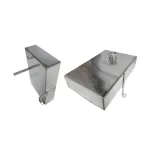
Here is our Custom sheet metal fabrication Sample Display: