Contract manufacturing is a production and business model that provides various manufacturing services.
It is the product of multinational companies adjusting their business and conducting strategic outsourcing. OEM, also known as contract manufacturing, or subcontracting, is a contract between a company and a manufacturer to produce products (or provide services), and the manufacturer ultimately delivers the fully packaged products at an agreed time.
For example, when a manufacturing company no longer has manufacturing capacity, it can use contract manufacturing. Of course, another more traditional alternative to sourcing parts is internal production, but it has certain disadvantages, such as high acquisition costs of machinery and equipment, regular maintenance costs and a continuous shortage of skilled workers. Then it is time to look for an outsourced manufacturer, you can place your order with this manufacturer in full, and you just wait to receive the fully packaged goods.
What is capacity planning?
Capacity planning is the basis of a complete order structure. It can be understood as the classification of all available resources according to the expected capacity requirements. This is related to the realization of a project or the operation of production. Capacity planning also applies to the allocation of machine or personnel resources. The goal of successful capacity planning is to make the best use of all resources within the specified time to achieve the highest efficiency. The required capacity is compared with the available capacity and the capacity is leveled.
Advantages of contract manufacturing
There are many potential reasons to use contract manufacturing. If a company has exhausted its own production capacities and has therefore reached a bottleneck, contract manufacturing can provide a quick replenishment. In addition, it makes sense to outsource a company’s own production to a contract manufacturer for cost reasons. Contract manufacturing is also a solution if a certain manufacturing process does not exist in-house.
The advantages are obvious:
Flexibility of use.
Lower labor costs.
More remote production processes become feasible.
Fixed costs for production machines are eliminated.
Peak order periods are under control.
Fast order processing.
Flexibility of use
Flexibility, high precision and fast turnaround times have become a must for the production of custom parts, which can become a challenge. With contract manufacturing, you can be flexible in terms of timing, order size, materials and the process itself.
Lower labor costs
When contract manufacturing is carried out in another country, it can often be produced at a lower cost. In addition, the country itself may be interested in tapping into the relevant know-how, which can further promote contract manufacturing.
More remote manufacturing processes become feasible
If an external company has built machines and know-how specifically for its processing, it can often do the work more efficiently than the customer. This results in higher part quality and even shorter processing times.
Freedom from fixed costs for production machines
For most processing steps, companies need special production machines. If the company only uses these machines for certain parts, it is not worth investing in these machines, as they also have to maintain them. With contract manufacturing, costs can be planned and foreseen without your plant having to invest blindly.
Mastering order peaks
You are probably familiar with this. In some months, your production needs to handle more orders than in other months. To cope with these order peaks, it is of course possible to hire more employees and buy more machines, but how do you deal with this (excess) capacity in periods with fewer orders? With contract manufacturing, you can handle order peaks without blindly increasing your own capacity.
Fast order processing
In addition to the advantages mentioned so far, with contract manufacturing you can also benefit from the fast order processing of the contract manufacturing company. With the expertise there and the right machines, processing can be carried out quickly. At the same time, you also have the capacity to carry out other processing steps. This means that your end product can reach your customers faster.
For companies
For companies, outsourcing is an operation that refers to obtaining a production order from an external supplier. Secondly, when a production order is created that includes outsourcing, an outsourcing order is automatically created by the system. The same applies when an existing production order is rescheduled or an internal operation is rescheduled, which is outsourced in the case of temporary capacity shortages. The order is then printed or sent to the supplier via email.
For contract manufacturers
The daily work of contract manufacturers is characterized by:
Low order coverage.
High price pressure.
Small quantities and fewer and fewer repeat orders.
A large number of inquiries.
Precise specifications for delivery dates, short delivery times.
Of course, in the changing business world, especially in cross-border trade, contract manufacturing offers many advantages, allowing companies to produce flexibly, quickly and at low cost. Mulan Group also provides contract manufacturing services. Of course, we provide sheet metal parts processing services. If you are in need of or looking for a sheet metal parts processor in China, you can contact us. Mulan Group has 18 years of experience in sheet metal processing and manufacturing services. Our cooperative customers are all over the world. We have a wide range of business coverage and are committed to delivering satisfactory products to you.
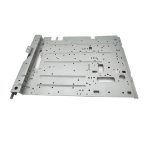
Here is our Sheet Metal sample Display: